Intelligent protection against automated bot attacks for web, mobile applications and APIs without affecting the UX.
Malicious bots drive your business to loss by brute-force hacking, identity theft, creating useless traffic and competitive parsing on websites.
Click fraud, content scraping, SEO manipulation, and other bot attacks can dramatically impact business revenue not talking about excessive abuse of application resources that power fraudulent activity, such as account takeover or application DDoS.
Stopping malicious bots helps maintain brand reputation and customers’ trust especially when it comes to credentials security.
Qrator.AntiBot distinguishes good and bad bot traffic without posing inconvenience for legitimate users and bringing comprehensive protection against automated content search, data scraping, brute-force attacks, and DDoS attacks.
Qrator.AntiBot is included in the delivery set of the Qrator Labs DDoS Mitigation platform and can be turned on and set in a special section of the Qrator UI.
Web-based locations
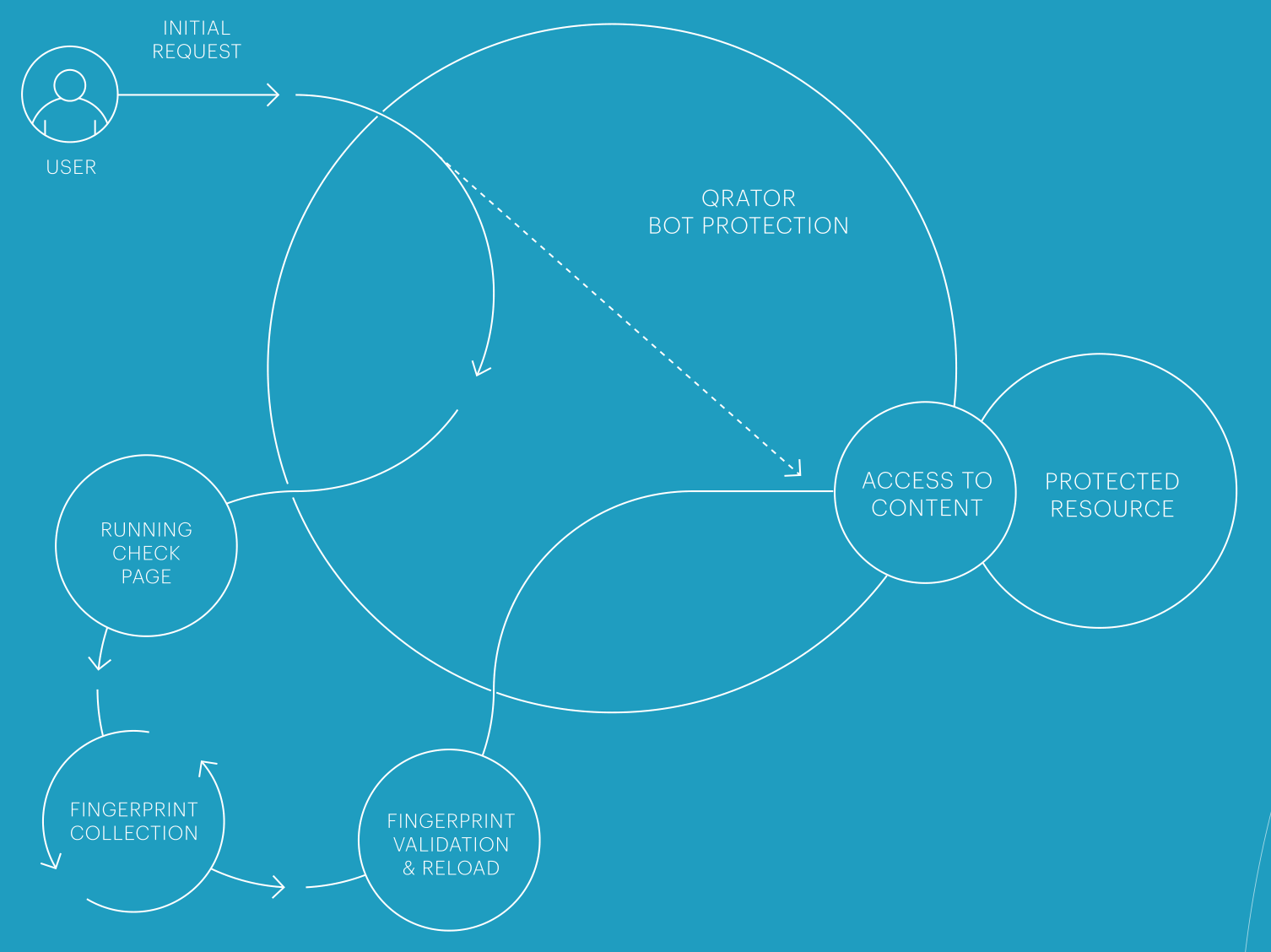
For the locations where web-based users are expected by the protected location, Qrator.AntiBot checks the environment of a browser addressing a protected resource and generates a tracking cookie for browsers considered as trusted. At the same time, Qrator.AntiBot restricts access to the resource for visitors who run script-based bots and/or utilize web scraping software suites, including full-stack browser-based solutions.
For the APIs used by native mobile app users (iOS & Android) Qrator.AntiBot supports several protection methods:
Qrator.AntiBot checks can be set up and customized in the following steps:
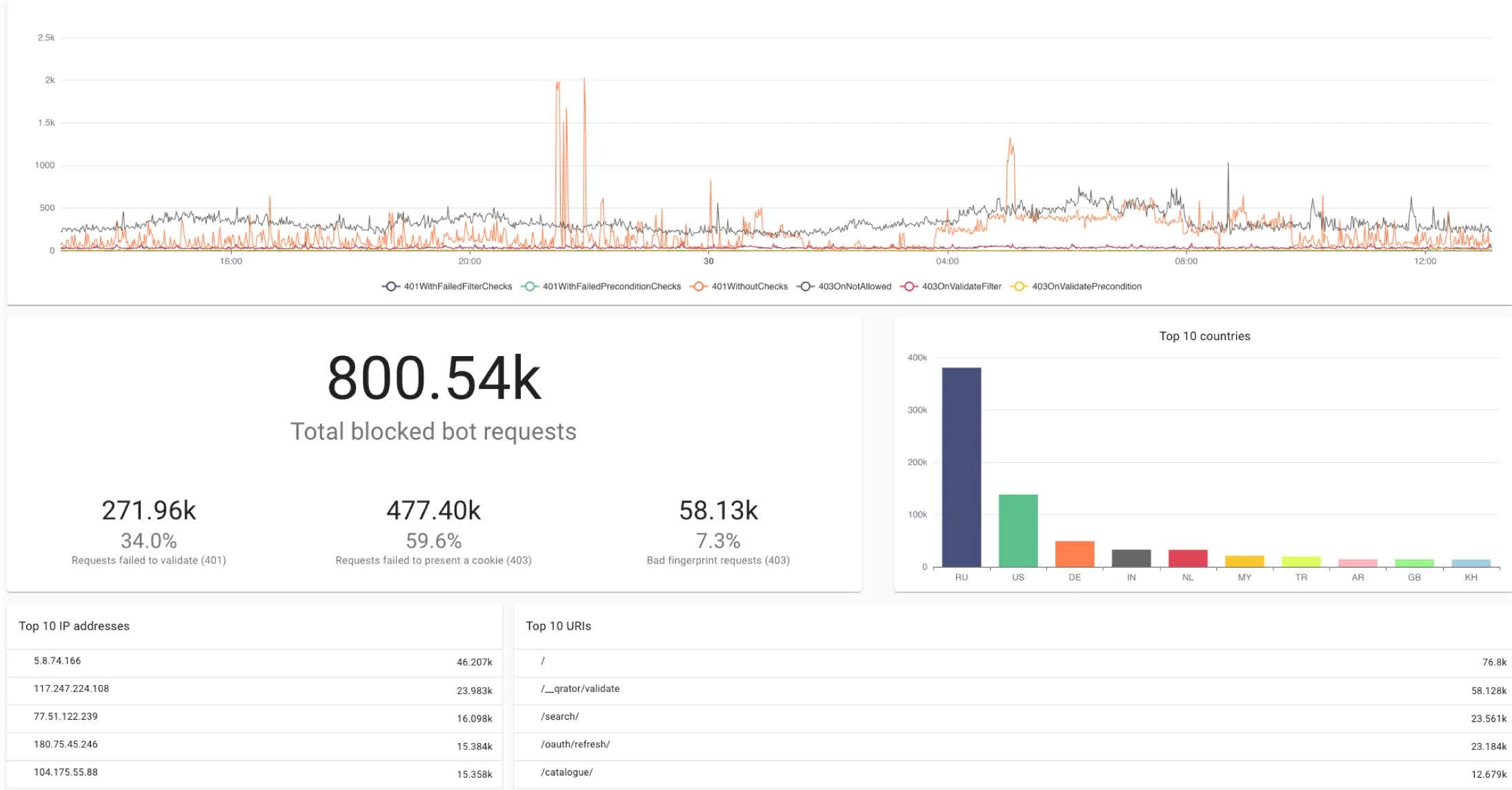
Qrator.AntiBot proxies a user’s request further in case of any validation result. If a browser sends any response to Qrator.AntiBot, it will not receive an error code, but validation details will be recorded in the event log. The event log can be viewed anytime by a Qrator.AntiBot operator.
Badly fingerprinted browsers or applications without JS support (including scrapers without the usage of browsers) will receive a customizable block page. A legitimate user will briefly see the check page first (a blank or a customized 401 page), and after validation will get the requested page.
The product’s interface supports permissions for good bots, QA and other cases requiring bypassing the checks. Trusted IP addresses, CIDR lists, geozones and header rules can be specified to set up these scenarios.