It appears that you've stumbled upon the unofficial beta version of the upcoming radar.qrator.net website. In this exciting moment, allow me to introduce you to the fresh functionality and notable changes we've made. Please bear in mind that this is just the initial description, so please don't judge too strictly! :)
We are thrilled to introduce the latest updates and features to enhance your experience on our platform.
Here's what you can expect:
We completely redesigned our backend: we have unified the backend for both Real-time BGP monitoring and the new radar.qrator.net site. This brings several advantages, including improved data consistency and performance.
We have worked on enhancing data consistency across different incident counters. Previously, there might have been variations in counter values between the Overview section and the Connectivity and Security Issues sections. Now, you can expect improved data consistency and accuracy.
We have made significant strides in improving performance. Historical data retrieval has been optimized, resulting in faster data acquisition, particularly in the Route Leaks section (Accepted Route Leaks).
The website has been rewritten using React.js, encompassing all sections. This modern framework allows for enhanced functionality and improved user interactions.

We are excited to present these updates and features, which aim to provide you with a more consistent, efficient, and user-friendly experience on our platform.
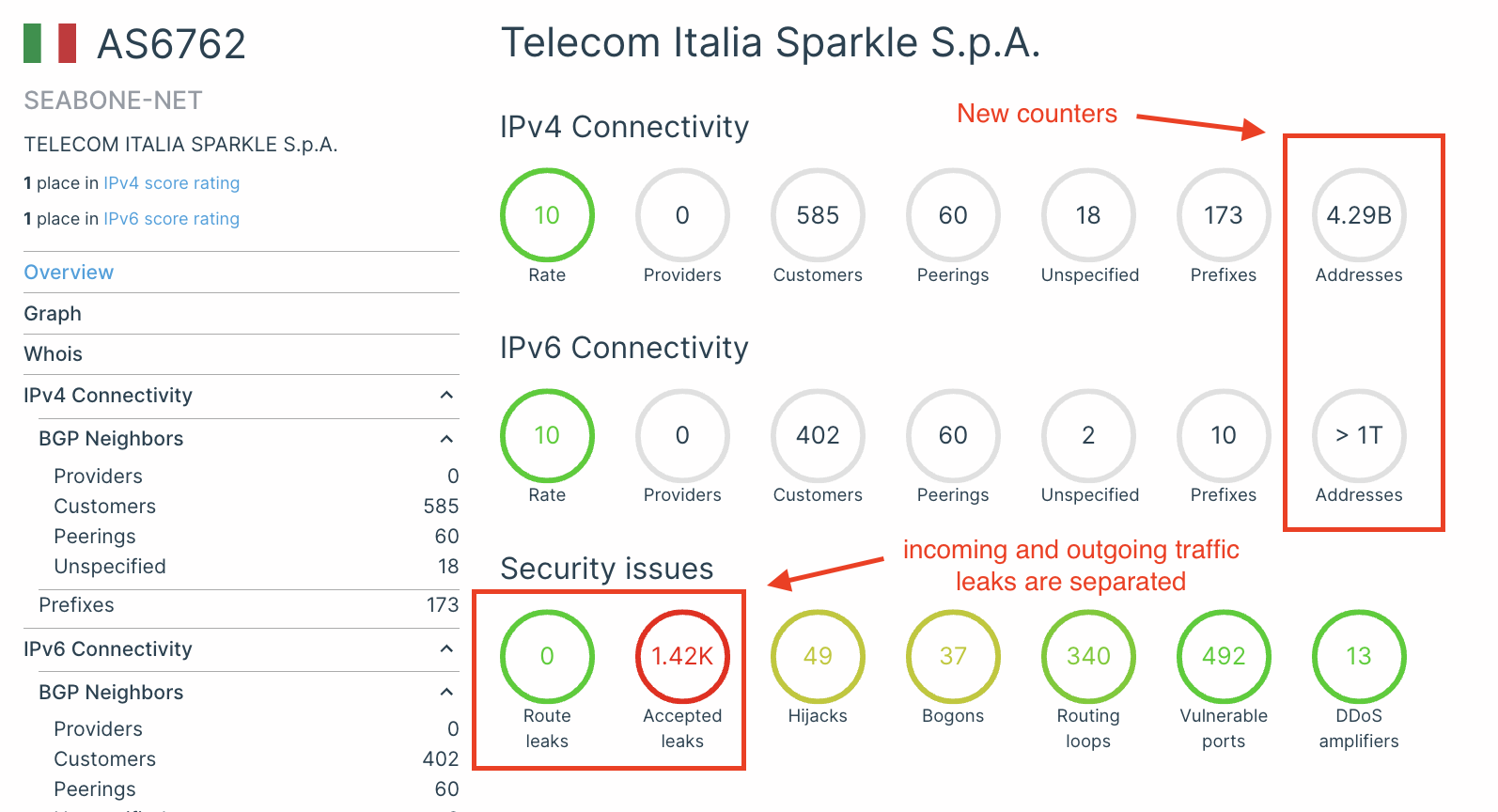
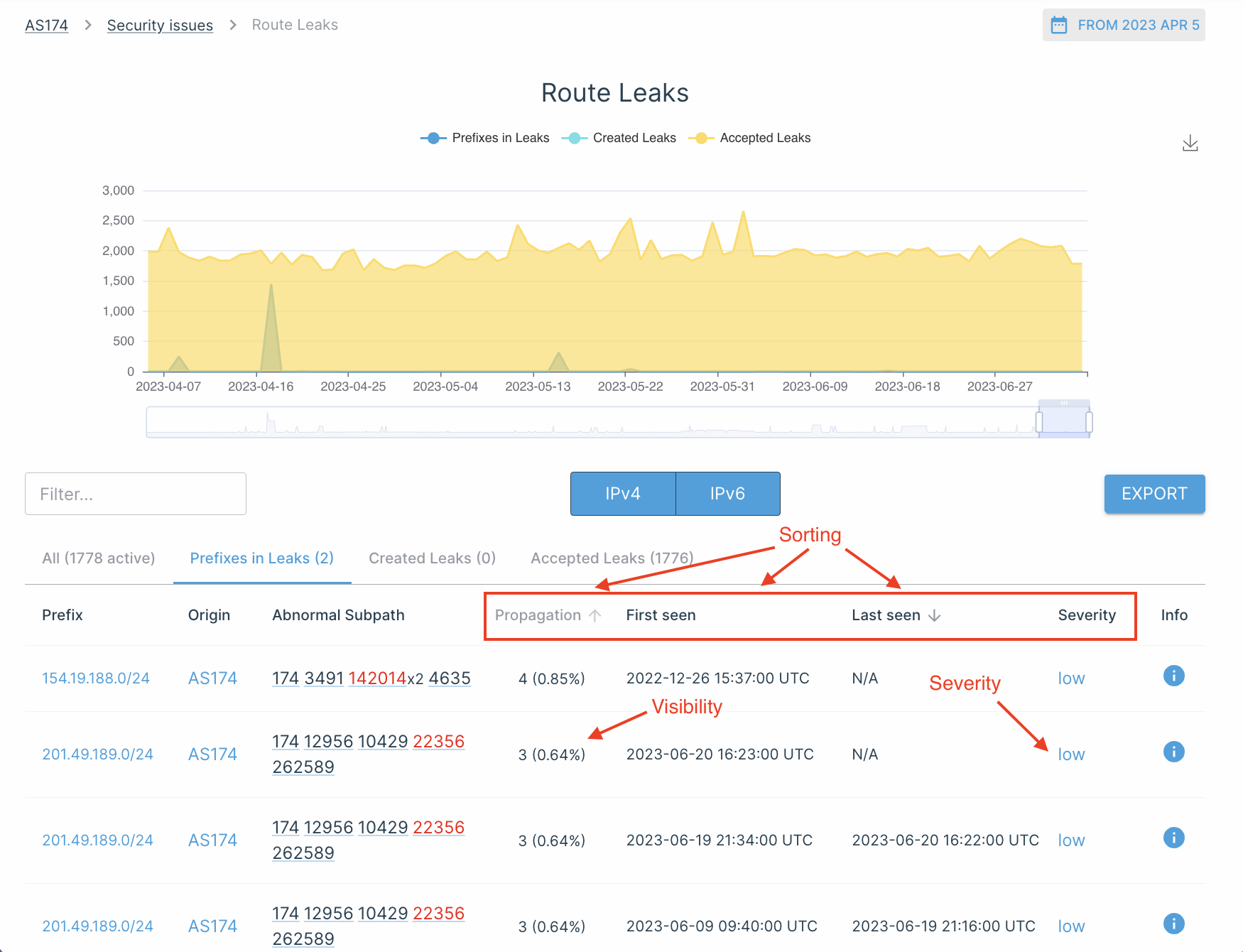
We have made some changes to improve the clarity of information in the Route Leaks counter. Now, incoming and outgoing traffic leaks are separated, reducing confusion for users. Additionally, we have added new counters that display the number of IP addresses in all speaker prefixes.
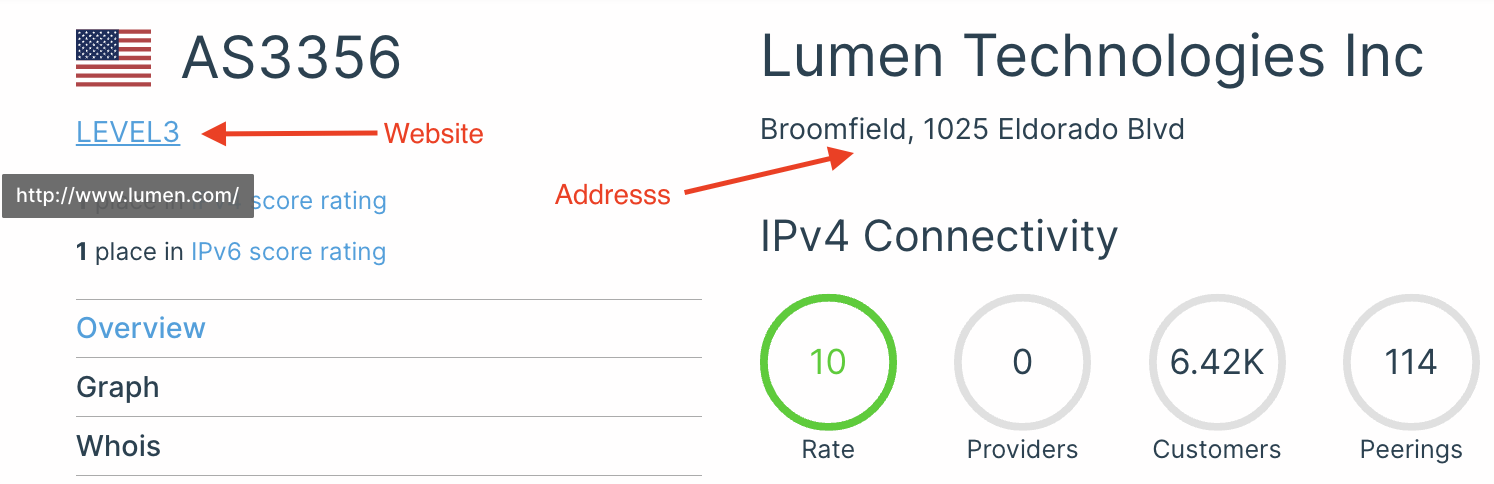
We have also started incorporating PeeringDB data into our dataset, which enriches the information available to our users. This includes additional details about AS, such as their website and address. This is just the beginning!
We've made improvements to the traffic routing graph. Now, the relationships between Autonomous Systems are colour-coded based on our model. This makes it easier to see which direction the traffic is flowing - up or down - and how it moves between peers.
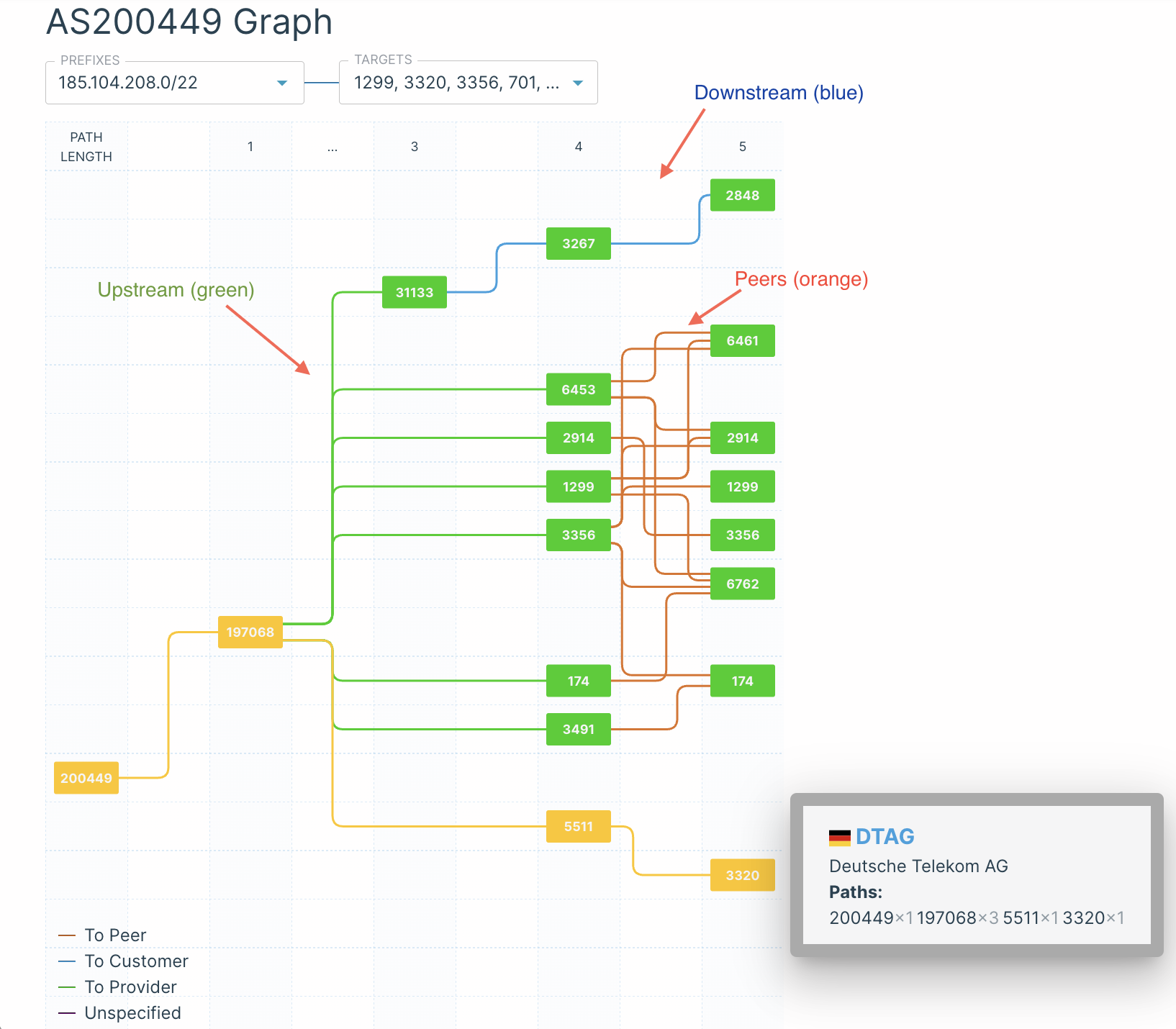
Additionally, we've added country markers to the Autonomous Systems, so you can easily monitor traffic transitions between countries.
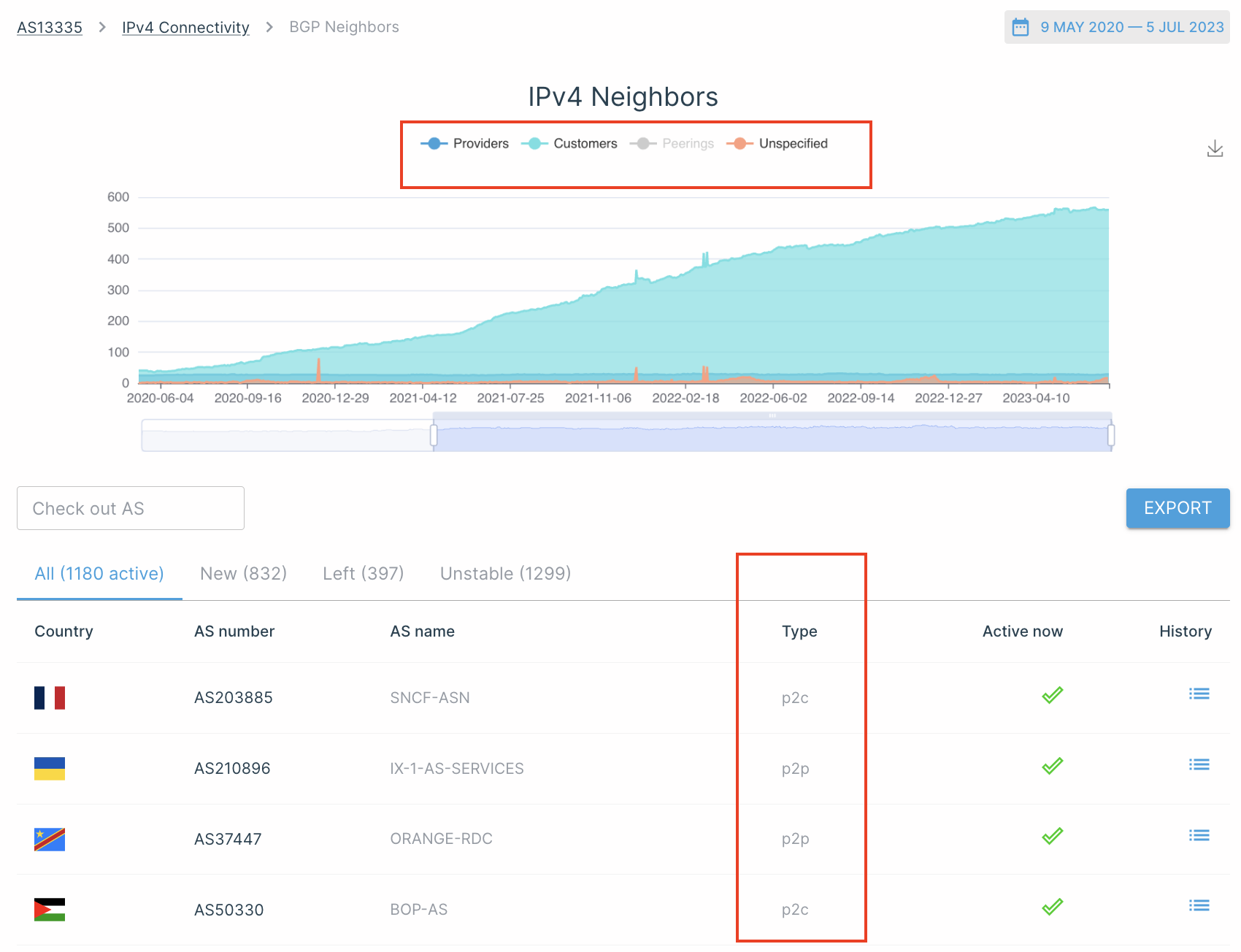
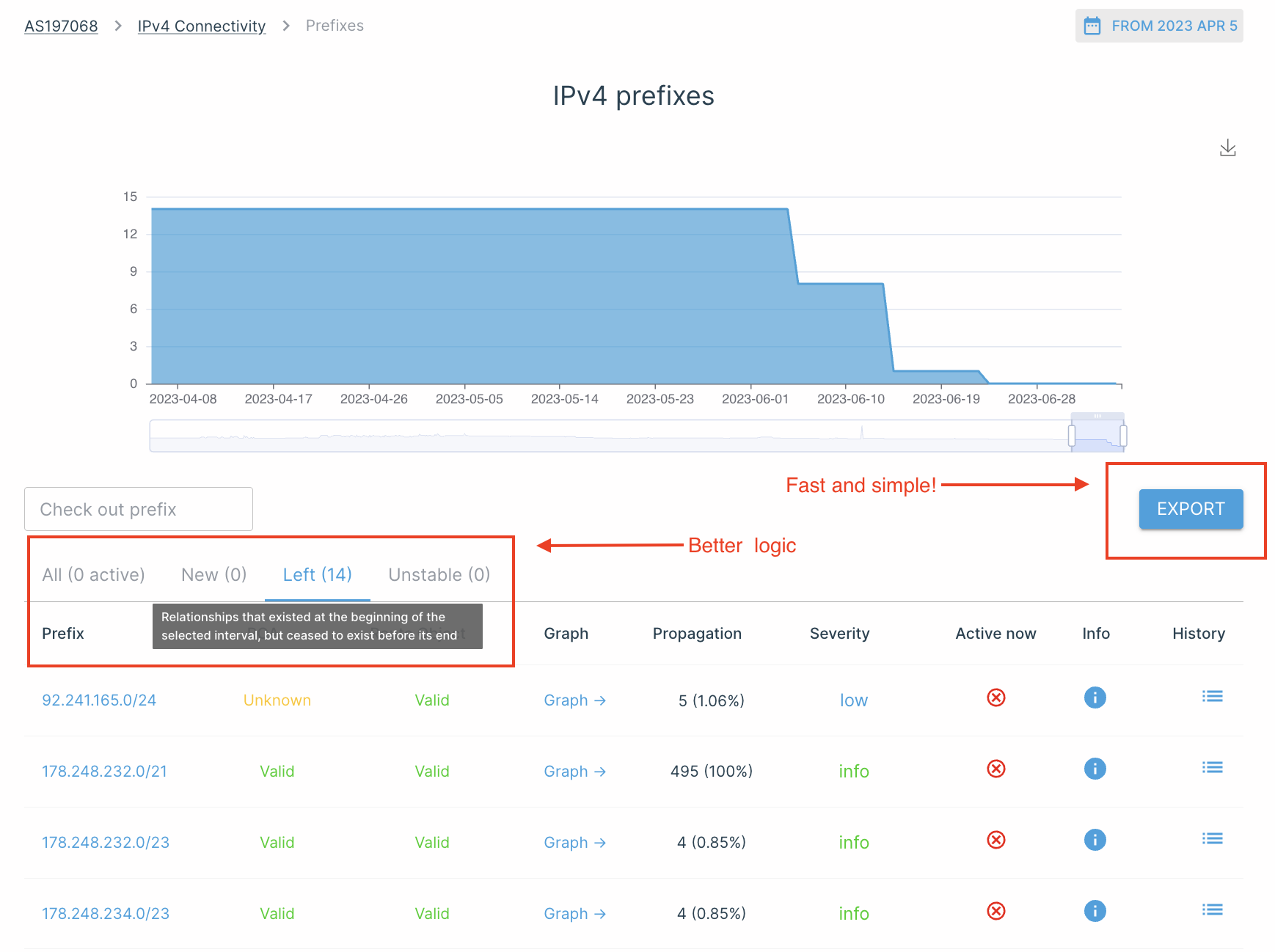
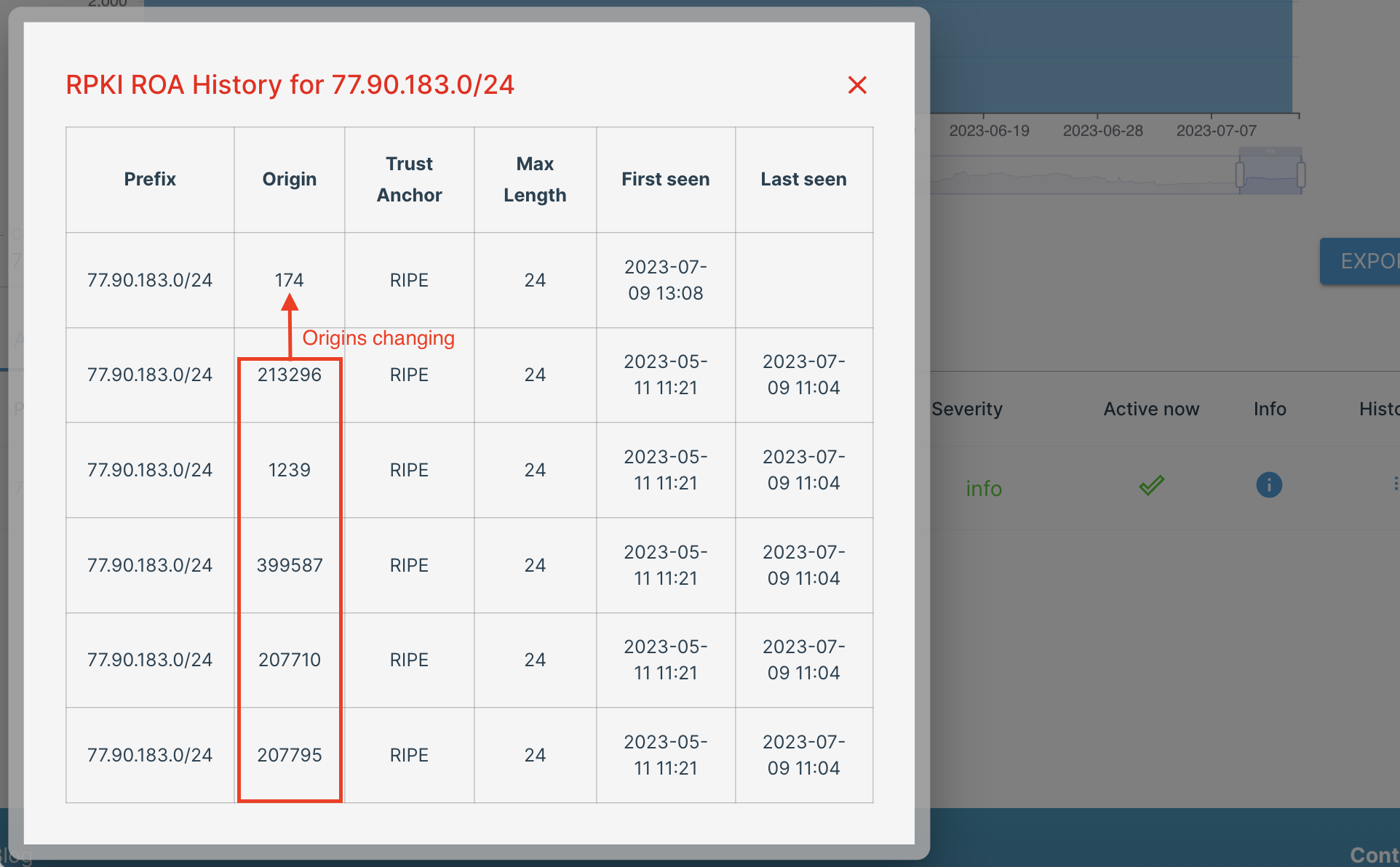
the exported file example:
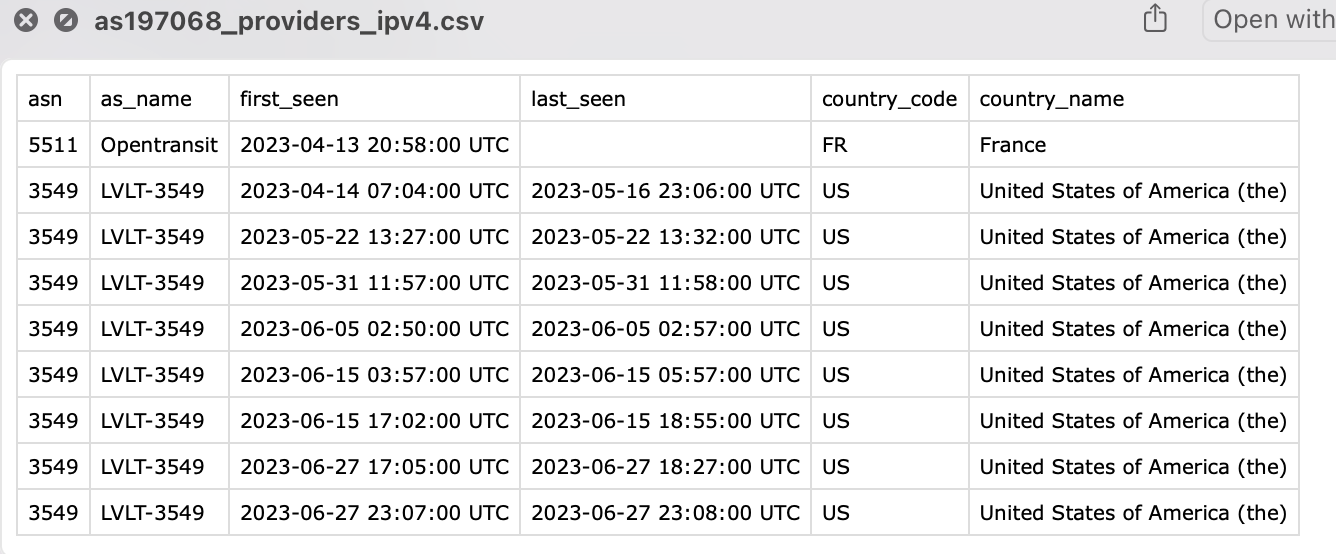
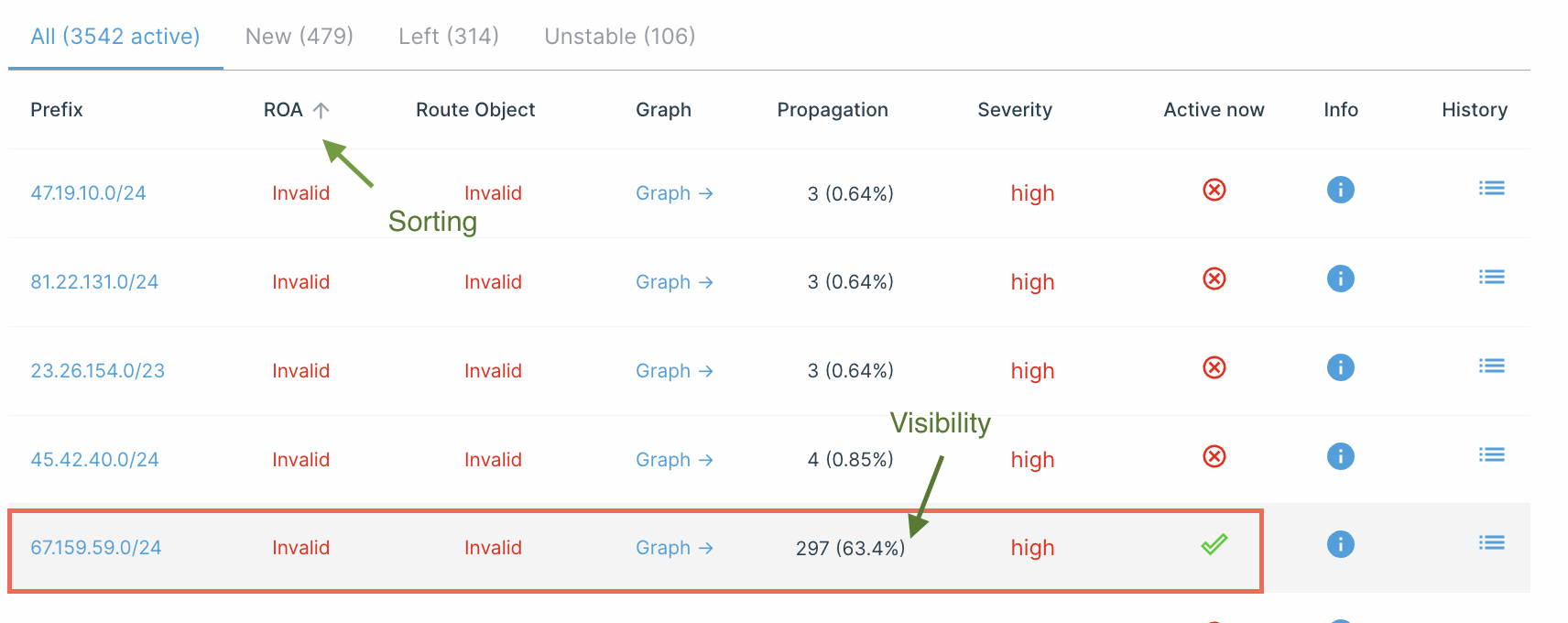
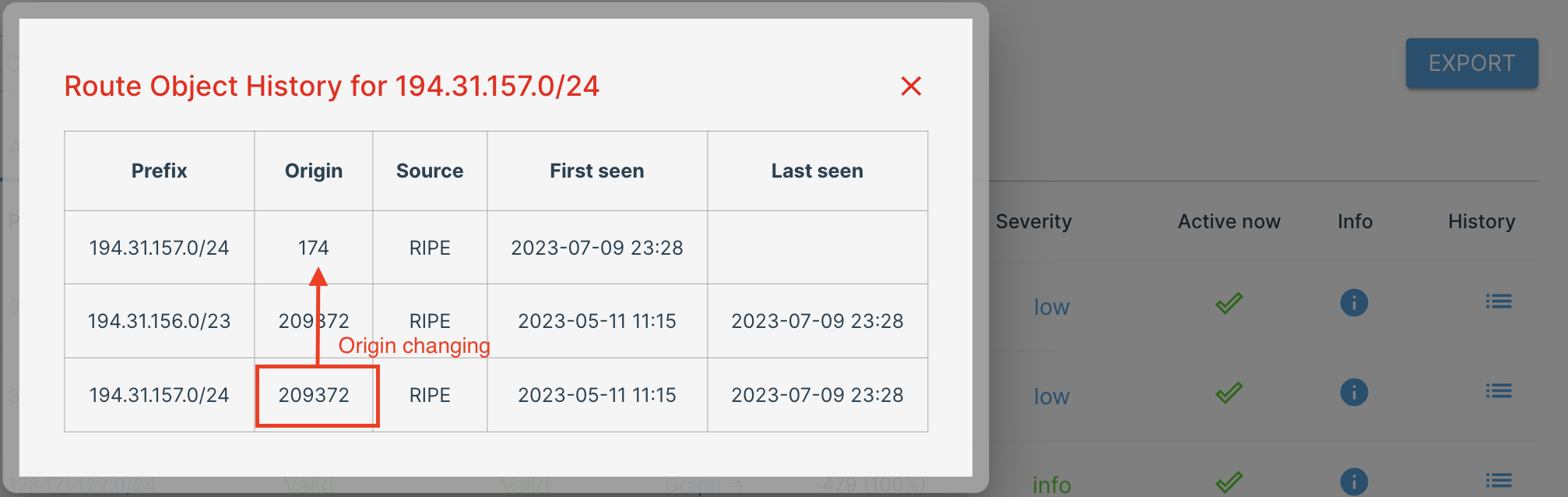
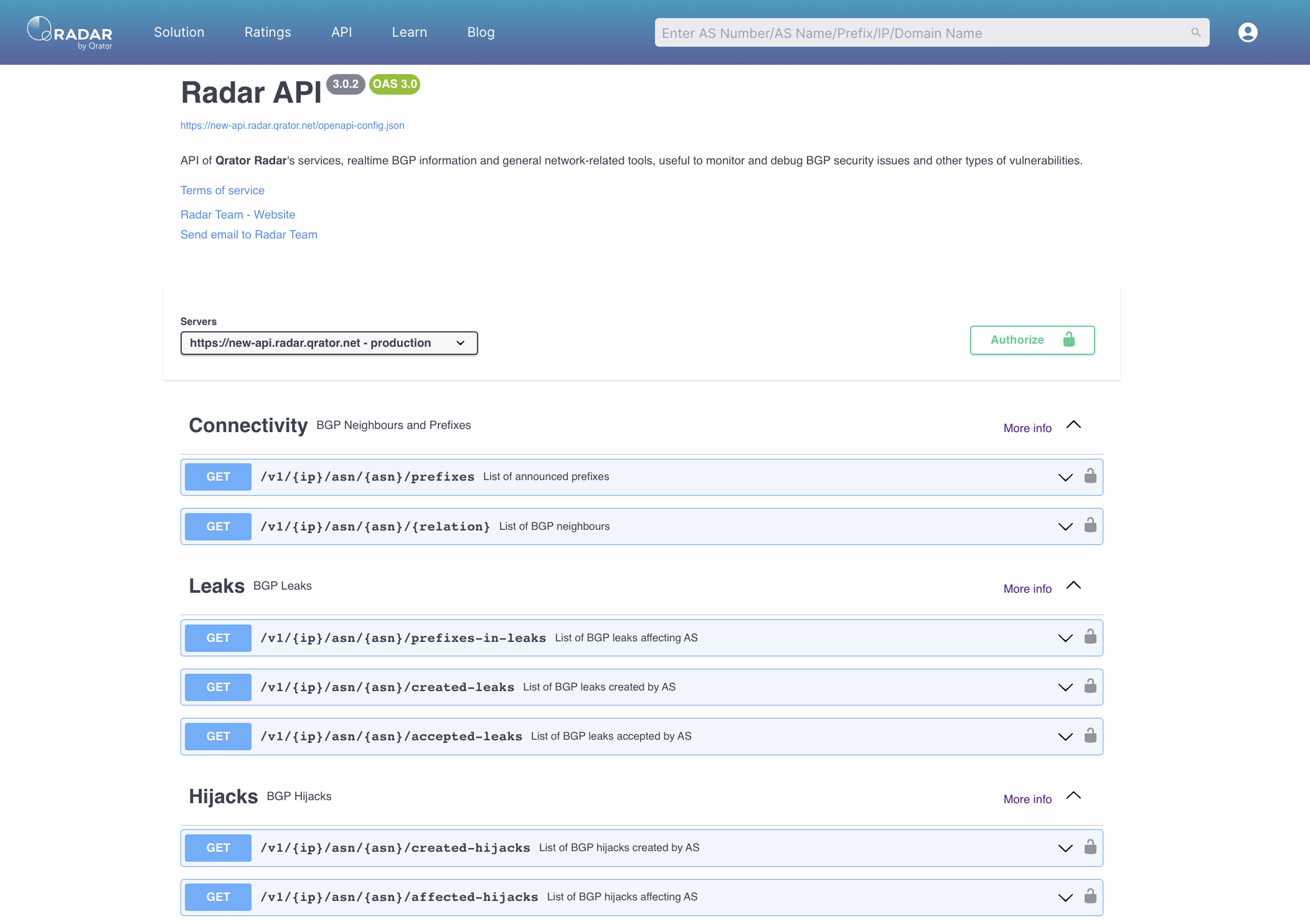
We have completely rewritten our API, ensuring backward compatibility with the old one. The new API offers a more flexible distribution of access rights. If you have custom methods tailored to your needs, these methods will only be visible to you in the API section.
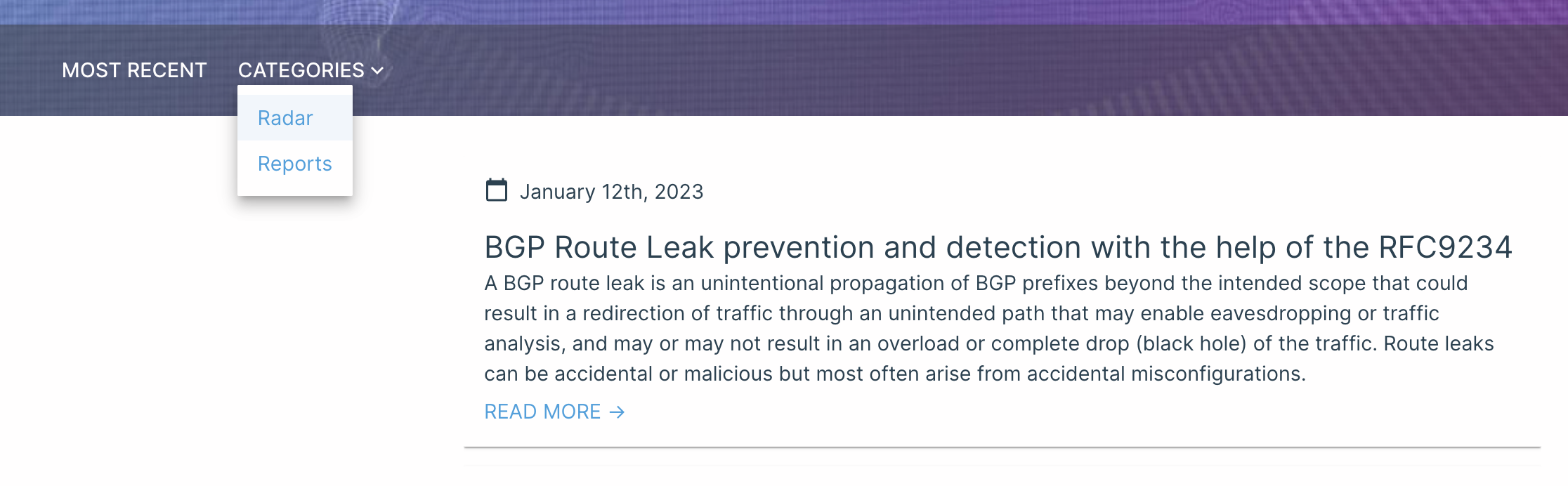
A "Categories" switcher has been introduced in the Blog section. One of the categories includes annual and quarterly updates about Qrator Labs companies.
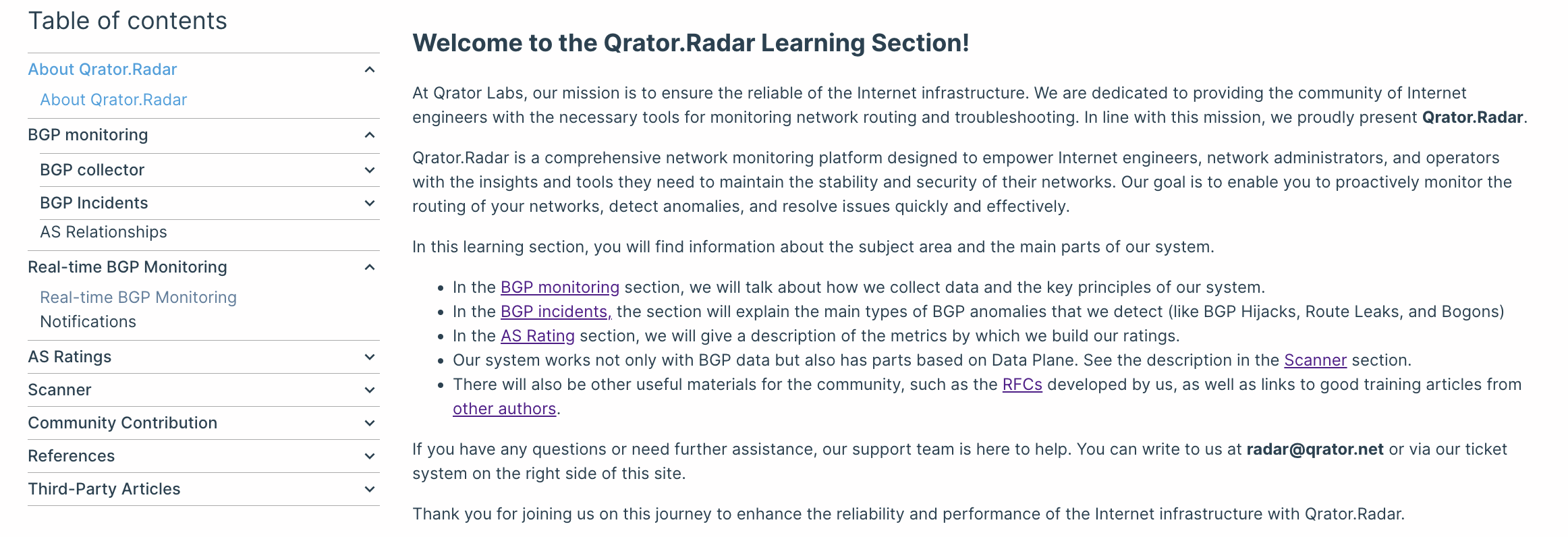
The Learn section now presents more useful information in a convenient tree structure. This section replaces the FAQ section from the old website.
We have significantly enhanced our rating system, transforming it into a valuable tool for network planning. The rating system has been expanded from 4 to 16 different ratings (added regional ratings), providing a more comprehensive evaluation of connectivity.
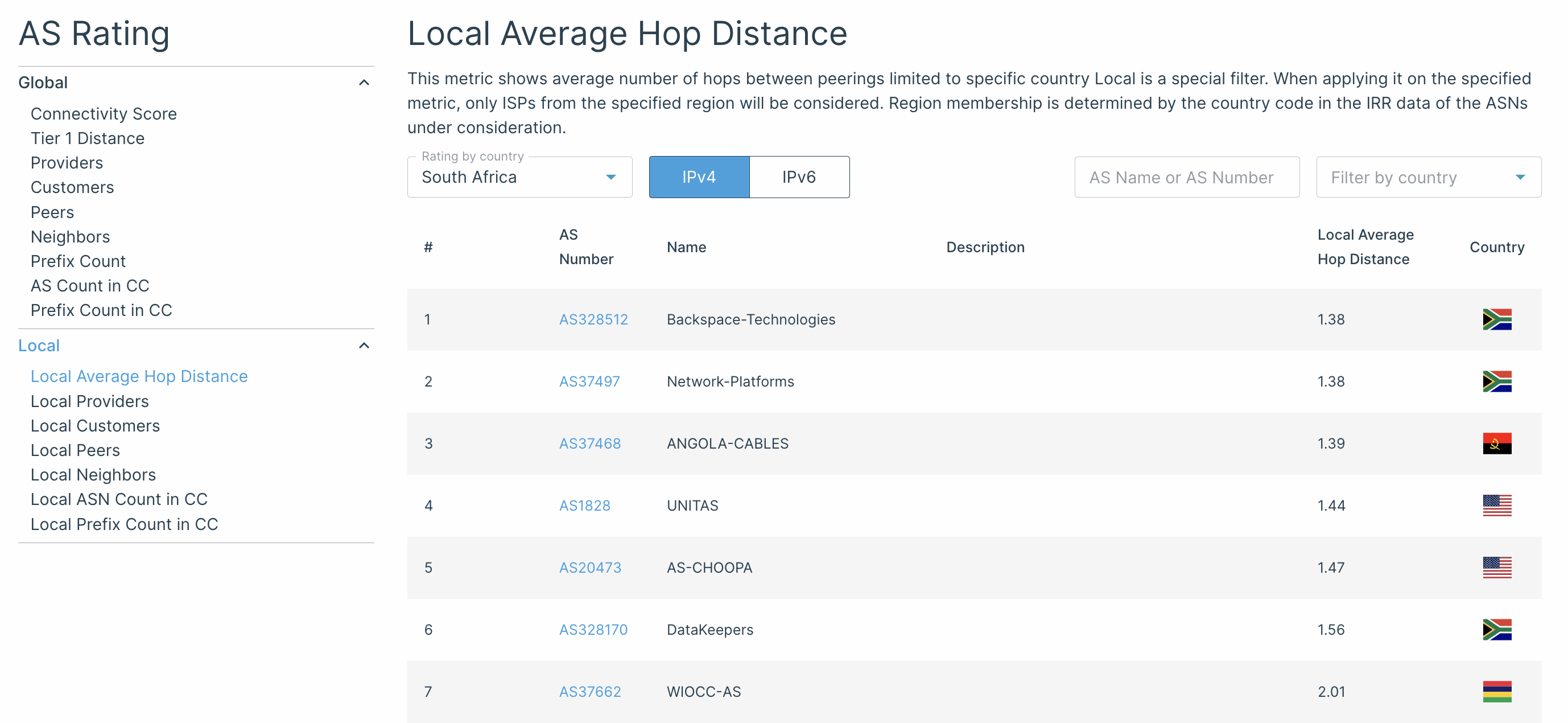
However, the details of this update will be shared separately, allowing for a more in-depth overview ;)
We know that there are several known issues on our website. Here are some of them:


Share your experience and expectations regarding DDoS protection. Your answers will help us tailor solutions to meet your cybersecurity needs.
Tell us about your company’s infrastructure and critical systems. This will help us understand the scope of protection you require.
Help us learn about how decisions are made in your company. This information will guide us in offering the most relevant solutions.
Let us know what drives your choices when it comes to DDoS protection. Your input will help us focus on what matters most to you.